Moving abroad: keep your number, call home cheaply, and find a place to live remotely

A move abroad has two communication problems that start weeks before the flight: keeping the phone number that your bank, your family and half your online accounts know, and finding somewhere to live in a city you may only see through a screen. Both are easier with a plan.
Your number: three realistic options
Number portability, the right to take your number to a new provider, almost always works only within a country. In the EU it is guaranteed by Article 106 of the European Electronic Communications Code; in the UK, Ofcom's rules let you text PAC to 65075 to get a switching code and normally complete the move within one working day; in the US, the FCC requires carriers to port numbers on request. None of these rules lets you move a French or British mobile number to an operator in Canada or Japan. So you choose between:
- Keep the home SIM active on the cheapest plan that keeps the number alive, and use it mainly to receive SMS codes. Check the operator's rules on inactivity: prepaid numbers can be withdrawn after a period without top-ups or calls, and the period differs between operators.
- Port the number to an internet calling service in the same country. Some VoIP providers accept ported mobile or landline numbers and let you make and receive calls through an app anywhere. Check before porting that the service can receive SMS from banks; many short-code and verification messages do not reach VoIP numbers.
- Let it go, after moving every important account to a new number or to an authenticator app. This is the clean option, but it takes weeks of updating.
Whatever you choose, do not cancel the old contract before deciding: a cancelled number may be recycled to someone else. Our guide to keeping your number explains porting rights and how to protect a number from SIM-swap hijacking.
Two numbers in one phone: eSIM
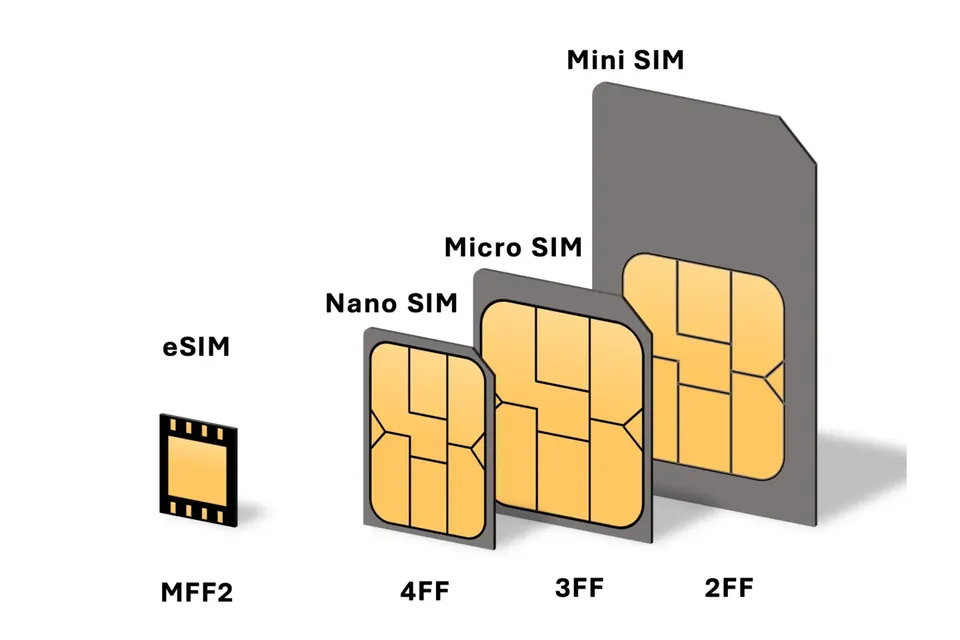
Most recent phones support dual SIM with at least one eSIM. A common setup for the first months abroad is:
- the home number on one line, with data roaming switched off, kept for SMS codes and calls from people who only know that number;
- a local SIM or eSIM in the new country as the default for mobile data and local calls.
The phone shows which line is ringing, and you pick the outgoing line per contact. The eSIM guide covers compatibility and the security risks of transferring an eSIM.
Roaming is not a moving plan
Inside the EU and EEA, "roam like at home" under Regulation (EU) 2022/612 lasts until 2032, but it is designed for periodic travel. Under Commission Implementing Regulation (EU) 2016/2286, an operator may monitor usage over a period of at least four months, and if you are mostly abroad and use your phone mostly abroad, it can warn you and then add surcharges. If you are moving for good, a local plan is cheaper and safer. Outside the EU, roaming on a home plan is usually far more expensive. Details are in our page on EU roaming rules.
Calling home cheaply
- App-to-app calls over Wi-Fi or mobile data cost nothing beyond the data: from about 0.36 to 1.2 MB per minute for voice, depending on the codec (see how much data a call uses). Video uses far more.
- Wi-Fi calling on your home number, if your home operator supports it abroad, lets you call home numbers as if you were in the country. Check the tariff first: some operators charge abroad as roaming, some as domestic.
- VoIP-to-phone credit is the answer for relatives who only have a landline. Per-minute rates to landlines are often low, but compare the rate to mobiles, which is usually higher.
- Emergency calls are a different matter: save the local emergency number (112 across the EU, 911 in the US and Canada) and use the phone's built-in dialler for it, because messaging and calling apps generally cannot reach emergency services. See emergency calls over VoIP.
A practical rule for the first month: tell family which app and which number to use, and at what time of day, so calls do not land at 3 a.m. in either direction.
Finding a place to live from a distance
Most people now shortlist a home before they arrive. Your phone is the main tool, and the same habits that protect you from phone scams protect you here.
Know the market before you look at listings
Start with the price level, so that a too-good offer stands out. If New York is on your list, for example, compare asking rents for apartments in two or three neighbourhoods on a listings site before you book a single video viewing, so you know what a fair price looks like for the size you need. Then check the local rules that decide your upfront costs. In New York State, the Housing Stability and Tenant Protection Act of 2019 limits a security deposit to one month's rent, and application fees for background and credit checks are capped at $20. In New York City, since the FARE Act took effect on 11 June 2025, a broker hired by the landlord cannot charge the tenant a broker fee.
Run a proper video viewing
- Ask for a live video call, not a pre-recorded tour, and ask the person to walk from the street door to the flat without cutting, so you see the building and the entrance number match the listing.
- Ask them to open taps, flush, switch on the cooker and lights, open windows and show the view from each one. Ask to see the ceiling corners and behind furniture for damp.
- Check mobile signal and Wi-Fi in the flat: ask them to run a speed test on the spot. If you will work from home, this matters as much as the kitchen.
- Record the call (with permission) and take screenshots for later comparison.
Verify the listing and the person
Rental scams copy real listings and change the contact details, or advertise homes that are not for rent. The US Federal Trade Commission reported in December 2025 that people had filed nearly 65,000 rental scam reports between January 2020 and June 2025, with about $65 million in losses. Its advice, and that of the UK's Action Fraud, comes down to a few checks:
- Search the address and the photos online: the same pictures on another listing at a different price are a red flag.
- Check who owns the property where public records allow, and that a letting agent is registered or licensed where that is required.
- Never pay a deposit or "holding fee" by wire transfer, gift card or cryptocurrency, and never pay before a viewing, in person or by a trusted proxy, and before a written lease.
- Be wary of urgency ("many people interested, pay today") and of a landlord who is conveniently abroad and cannot show the place.
- If you can, ask a friend or a paid relocation service in the city to view in person before you sign.
If you are scammed, report it to the local police and, in the US, at ReportFraud.ftc.gov; in the UK, to Action Fraud. Tell your bank immediately: a quick report sometimes stops a transfer.
A checklist for the last month before you leave
- Decide what happens to your number, and move bank and account verification to an authenticator app where possible.
- Check your phone is unlocked and supports eSIM; buy or order the local plan.
- Agree the calling app and times with family.
- Save the local emergency number and your embassy's contact details.
- Shortlist neighbourhoods, check local deposit and fee rules, and run live video viewings before paying anything.
Related: every way to call across borders, compared.
Sources
- EUR-Lex, Directive (EU) 2018/1972, European Electronic Communications Code (Article 106, number portability).
- Ofcom, Switching mobile provider.
- Federal Communications Commission, Porting: keeping your phone number when you change providers.
- EUR-Lex, Regulation (EU) 2022/612 on roaming and Commission Implementing Regulation (EU) 2016/2286 on fair use.
- Office of the New York State Attorney General, Residential Tenants' Rights Guide.
- NYC Commission on Human Rights, Best practices for housing providers (application fee limit).
- NYC Department of Consumer and Worker Protection, Fairness in Apartment Rental Expenses (FARE) Act.
- Federal Trade Commission, Rental listing scams and Data Spotlight: rental scams (December 2025).
- Action Fraud (UK), Rental fraud.
 Calling abroad
eSIM explained
How eSIM profiles are downloaded, which phones support them and what to check before travelling.
 Phones and numbers
Keeping your number
Porting rights in the EU and US, caller ID over the internet, and the fight against spoofing.
 Calling abroad
 compared
Roaming, local SIMs, travel eSIMs, Wi-Fi calling and apps: costs and catches side by side.