Satellite texting on an ordinary phone: how direct-to-cell works and what it can do
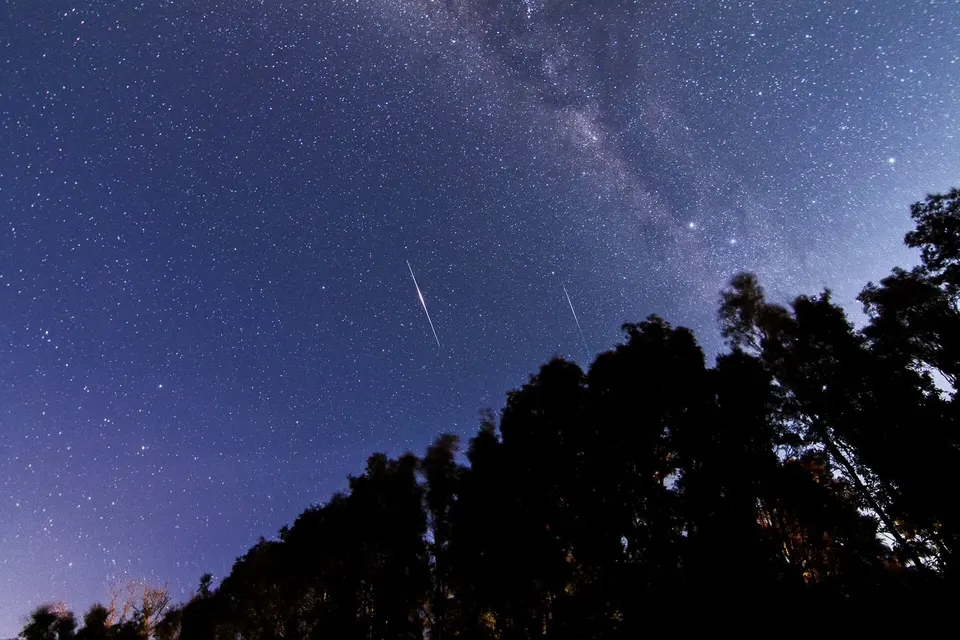
For decades, calling from a place with no mobile coverage meant carrying a dedicated satellite phone. Since the mid-2020s, ordinary smartphones have started to send text messages, and in some offers make calls, straight to satellites. The feature is real and genuinely useful in an emergency, but it works very differently from the coverage you get near a mast, and it is worth understanding before you plan a trip around it.
Two different ways a phone can reach space
People use "satellite messaging" for two technically distinct things.
- Satellite services in satellite spectrum. Some phones contain radio hardware that talks to an established mobile-satellite operator on frequencies reserved for satellite use. The phone maker usually runs the service, and it is often limited to emergency messages, location sharing and short texts. It does not depend on which mobile operator you use.
- Direct-to-cell in mobile spectrum. Here a satellite operator borrows radio frequencies from your mobile operator and acts, in effect, as a cell tower in orbit. Your phone sees what looks like a very weak network belonging to your own operator and connects with its normal radio. In the United States this model is called Supplemental Coverage from Space (SCS); elsewhere you will see "direct-to-device" or "direct-to-cell".
The difference matters for you as a customer. The first type depends on the handset model. The second depends on your operator having a satellite partner, on your plan including the service, and on your phone being approved to use it.
What the standards say
The mobile industry's standards body, 3GPP, treats satellites as "non-terrestrial networks" (NTN). According to its own overview of the work, Release 17, whose protocol definitions were frozen in June 2022, was the first release with normative NTN requirements for 5G, and it also started LTE-based NTN work for low-power IoT devices. Release 17 assumes that ordinary handheld devices can be supported, and later releases add new satellite bands, better coverage and features such as store-and-forward messaging (3GPP, "NTN overview").
The same 3GPP document sets out the obstacles that make satellite links harder than a mast a few kilometres away:
- Distance and delay. Low Earth orbit satellites fly roughly 500 to 2,000 km up; geostationary satellites sit 35,786 km above the equator. A terrestrial radio hop usually adds less than a millisecond of delay, while a geostationary link can add a few hundred milliseconds.
- Movement. Low satellites cross the sky quickly, so the signal's frequency shifts (the Doppler effect), the delay changes constantly and the "cell" on the ground moves with the satellite.
Delay is why low orbits are favoured for talking to phones. For comparison, the ITU guidance we quote in our guide to VoIP call quality treats one-way delay below about 150 ms as comfortable for conversation.
Why texts come before calls
A phone antenna is tiny and its transmit power is limited by safety rules, and the satellite is hundreds of kilometres away rather than a few kilometres. The signal that survives the trip is weak, so the amount of data that can pass is small, and it has to be shared by everyone under the same satellite beam. A text message needs very little data and tolerates a delay of several seconds; a voice call needs a steady stream; video needs far more. That is why commercial services typically launched with messaging first, then added some apps, data or voice where the link allows.
In practice, expect the following, whatever the offer:
- you need a clear view of the sky: trees, canyon walls, buildings and the inside of a car or tent all weaken the link;
- a message can take noticeably longer to send than on a mast, and may need a few attempts;
- the phone usually switches to satellite only when no ordinary network is available, and returns to the mast network as soon as one appears;
- your battery drains faster while the phone searches for a weak signal.
The US rules: Supplemental Coverage from Space
The Federal Communications Commission adopted its SCS framework on 14 March 2024 and released it the next day as a Report and Order (FCC 24-28, GN Docket No. 23-65). The Commission described it as the first regulatory framework of its kind in the world. Its main points:
- Your operator stays in charge. A satellite operator can use mobile frequencies only under a lease with the terrestrial licensee or licensees that hold all the licences on that channel across a defined geographic area.
- Named bands. The eligible bands include parts of the 600 MHz, 700 MHz and 800 MHz bands, Broadband PCS and the AWS-H block, plus the 700 MHz band licensed to FirstNet, the US public safety network. The Commission left the WCS band out.
- Secondary status. Satellite use is authorised on a secondary basis, so it must not cause harmful interference to existing services.
- Interim 911 rules. Mobile operators that extend their coverage through SCS must pass all SCS 911 voice calls and texts to a public safety answering point, either by location-based routing or through an emergency call centre, and must send the caller's location information and phone number so that the call-taker can dispatch help and call back. The FCC opened a further consultation on improving 911 over satellite.
- Separate from existing satellite services. The FCC stated that SCS sits apart from the existing mobile-satellite framework, which is the legal home of the first type of service described above.
The order also required phone makers to update the equipment authorisations of existing models so that a public database shows which devices are approved for SCS. On 22 April 2026, two FCC bureaus waived parts of that requirement so that customers using devices authorised on or before 29 June 2024, but not yet re-certified, can still connect to SCS services, citing access to 911 as a reason (FCC DA 26-380).
Outside the US, regulators are writing their own rules, and availability varies by country and by operator. Do not assume that a feature that works on your phone at home will work abroad, even with roaming switched on.
Satellite and emergency calls
If you are in danger and have no coverage, try the emergency number anyway: your phone will attempt any network it can find, and in some countries and on some phones it will offer a satellite option. But satellite messaging is a backup, not a guarantee. Our guide to emergency calls over VoIP, Wi-Fi calling and apps explains how emergency calls reach services on ordinary networks and why built-in diallers matter. For serious backcountry travel, a dedicated personal locator beacon or satellite communicator remains the more reliable choice, and telling someone your route costs nothing.
Before you rely on it: a checklist
- Does your operator offer a satellite service in the country where you will be, and is it included in your plan or a paid add-on?
- Is your exact phone model supported, and is its software up to date?
- Does the service cover only texts, or also apps, data or voice calls?
- Can it reach emergency services, and how is your location sent?
- Have you tried it once, outdoors with a clear sky, before you need it?
- Will you carry a backup: a charged power bank, an offline map and, for remote trips, a beacon?
A phone that can text via satellite closes many coverage gaps, but it is not the same as a mast overhead. Treat it as a way to get a short message out, and plan your trip as if it might not work.
 Phones and numbers
Emergency calls over VoIP
Whether 112 and 911 work over Wi-Fi calling, VoIP lines and apps, and how location is sent.
 How calls travel
Why VoIP calls break up
Latency, jitter and packet loss, and the fixes for robotic voices and dropped calls.
 Phones and numbers
Phones that call well
Operating system support, background limits, carrier settings and Bluetooth headsets.