Calling toll-free numbers from abroad: why 0800 and 1-800 numbers fail, and what to dial instead
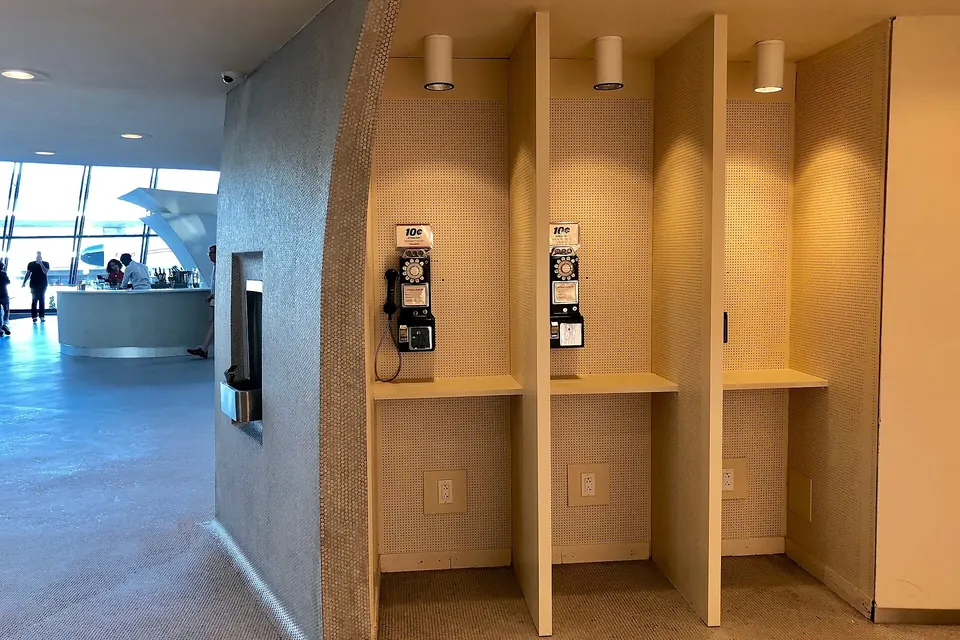
Your card is blocked, your flight is cancelled or your parcel is missing, and the number on the website is a freephone line: 0800 in the UK, 1-800 in the United States, 1800 in Australia, 0800 in France or Germany. You dial it from abroad and get a recorded message, a fast busy tone or nothing at all. This is not a fault on your phone. Freephone numbers are built to work inside one country, and the reason explains which workarounds succeed.
Who pays for a freephone call
On an ordinary call, the caller pays. A toll-free number reverses that: the business that rents the number pays for the incoming calls, and the caller pays nothing or very little. US federal rules put it in one sentence, defining a toll free number as "a telephone number for which the toll charges for completed calls are paid by the toll free subscriber" (47 CFR 52.101).
That arrangement is negotiated with operators in one country, at domestic rates. A call arriving from abroad would have to be carried across international links, and somebody would have to pay the international leg. The business usually has not agreed to, and the foreign operator has no way to bill it. So most freephone numbers are simply not reachable from outside their own numbering plan, or are reachable only at the caller's expense.
Each country also uses its own prefixes, so the same digits mean different things in different places:
| Where | Typical freephone prefixes | Note |
|---|---|---|
| United States and Canada | 800, 888, 877, 866, 855, 844, 833 | Written 1-800 and so on; shared by the whole North American numbering plan |
| United Kingdom | 0800, 0808 | Free from landlines and mobiles inside the UK since 1 July 2015 |
| France | 0800 to 0805 | Known as "numéros verts" |
| Germany | 0800 | "Freecall" numbers |
| Spain | 900 | Domestic freephone range |
| Australia | 1800 | "Freecall"; 13 and 1300 numbers are not free |
The leading 0 in most European formats is a domestic trunk prefix and disappears in international format, which is one more reason a freephone number written for local callers rarely dials cleanly from another country. If you are unsure how to rewrite a number, the section on number formats in our guide to calling abroad walks through it.
What usually happens when you dial one from abroad
Results vary by operator and country, but three outcomes are common:
- The call fails. Your operator, or the network at the other end, refuses it. You hear a message that the number cannot be reached from your location, or just a tone.
- The call connects and you pay. Some businesses accept international calls to their freephone number, and some operators route them, but you are charged as for an international call, plus roaming charges if you are using a mobile outside your home country. "Free" only describes who pays at home.
- The call connects for free. This happens mainly when the call never really leaves the home network, which is the case with Wi-Fi calling described below.
Inside the European Union, roaming rules add a specific warning. Calls to customer service lines and some freephone numbers in another country can cost more than ordinary calls, and operators must tell you so. Our guide to EU roaming rules explains what "roam like at home" covers and where these special numbers fall outside it.
International freephone numbers: +800
There is a format designed to be free across borders. The International Telecommunication Union runs a register of Universal International Freephone Numbers (UIFN). Each one is made of the country code 800, reserved for this global service, followed by an eight-digit subscriber number, for eleven digits in all. The ITU's own example is +800 12345678, and callers dial their country's international prefix (or the + sign on a mobile) before it. A UIFN is meant for businesses that want to be reached from two or more countries, and must be in service between at least two countries within 180 days of being reserved (ITU, Universal International Freephone Numbers).
The catch is that the number is only free where the business has arranged it. The company chooses the countries and operators it will pay for. From anywhere else, the call may fail or be charged. If a bank, airline or insurer publishes a +800 number, it is worth trying first, but treat it as "free from many places", not "free from everywhere".
Wi-Fi calling: the call starts at home
When you make a call with Wi-Fi calling switched on, your phone connects over the internet to your own operator's network and the call starts there, as if you were at home. Many operators bill Wi-Fi calls placed abroad to numbers in your home country as domestic calls, which means a home freephone number may work, at no cost, from a hotel room on the other side of the world.
Three conditions apply. Your operator must offer Wi-Fi calling and allow it in the country you are in; some switch it off in certain countries. Your phone must actually be using Wi-Fi rather than a foreign mobile network when you place the call, so turning on aeroplane mode and then re-enabling Wi-Fi is a common way to be sure. And the tariff is a commercial decision, so check your operator's page before relying on it. Our guide to Wi-Fi calling explains how the service works and what it normally costs.
Internet calling services and apps
Some VoIP providers hand calls over to the telephone network inside the destination country. A call placed that way can reach freephone numbers there, because to the receiving network it looks like a local call. Whether a given provider supports freephone numbers, and whether it charges for them, depends entirely on its rate table; look for the specific prefix, not just the country. A VoIP account with a phone number in your home country, used through an app, often behaves like a home line for this purpose.
Plain messaging apps are a different route. Many large companies now offer support by chat in their app, on their website or on a messaging platform, which avoids the phone problem altogether and leaves a written record of what was agreed.
Find the number meant for callers abroad
Businesses that serve travellers usually publish a separate line for international callers. Look for it before you need it:
- Banks and card issuers often print an international number on the back of the card, next to the domestic freephone one. Some accept reverse-charge (collect) calls from abroad for lost or stolen cards; the card's website lists which.
- Airlines, travel insurers and assistance services normally give a number in full international format in your booking or policy documents.
- Company websites often hide the international number under "contact us from abroad" or in the footer of the help pages. Search for the company name with "from abroad" or "international callers".
- Your mobile operator has its own short codes and a number for customers abroad, usually free from its network while roaming.
Before a trip, save these numbers in your contacts in international format, starting with +, so they dial correctly from any country.
Beware of look-alike numbers
Do not assume that a number is free because it looks like a freephone number. In the North American plan, some three-digit codes that look like ordinary US area codes, such as 809 or 876, belong to Caribbean countries, and calls to them are international. In many European countries, numbers that start with 08 or 09 include shared-cost and premium ranges next to the free ones. Search results and social media pages also carry fake "customer service" numbers set up by scammers. Take the number from the company's own website, app or documents, and read our guide to one-ring call scams for how premium destinations are disguised.
A short checklist before you travel
- Write down the international numbers of your bank, card issuer, insurer and airline, not just their freephone lines.
- Check whether your operator offers Wi-Fi calling in the countries you are visiting, and switch it on before you leave.
- If a company publishes a +800 number, note it as a first option, with an ordinary international number as backup.
- Check your operator's tariff for calls to special numbers while roaming.
- Install the apps of the companies you might need to contact, so chat support is available if no phone route works.
A freephone number is a promise made to callers in one country. Once you leave it, the cheapest call is the one routed back through home, and the most reliable number is the one the company publishes for people exactly where you are.
 Calling abroad
 compared
Roaming, local SIMs, travel eSIMs, Wi-Fi calling and apps: costs and catches side by side.
 How calls travel
Wi-Fi calling explained
How carrier Wi-Fi calling reaches your operator over any network, and when an app is better.
 Calling abroad
EU roaming rules
What roam like at home covers, fair-use limits, and where the EU rules stop.