How to dial an international number: the plus sign, exit codes and the zero you must drop
A friend in London gives you a number starting with 07, a hotel in Rome lists one starting with 06, and an American client writes "(212)" in front of theirs. Dial any of them as written from another country and the call fails, usually with a recorded message you cannot understand. International numbers follow one simple structure, set by the International Telecommunication Union (ITU), but each country adds its own habits on top. Once you know which digits belong to the number and which are only instructions for local callers, almost every international call goes through first time.
The three parts of an international call
Everything you dial to reach another country falls into three blocks:
- The international prefix, often called the exit code. It tells the network in the country you are calling from that what follows is a foreign number.
- The country code, one to three digits identifying the destination country: 1 for the United States and Canada, 44 for the United Kingdom, 33 for France, 81 for Japan.
- The national (significant) number: the area code, if the country uses them, followed by the subscriber number.
The ITU's numbering standard, Recommendation E.164, recommends that the country code and the national number together should not exceed 15 digits, not counting the international prefix (ITU-T Recommendation E.164). A number written in that complete form, with a plus sign in front, is what people mean by "E.164 format".
Exit codes: why 00 is not universal
The ITU recommends that countries setting up or revising their numbering plans use 00 as the international prefix, and most do. The exceptions are old and well established. The table below shows a few common cases, taken from the ITU's consolidated list of dialling procedures, which countries keep up to date by notifying changes to the ITU (ITU, Dialling procedures; the edition we used is dated December 2011).
| Calling from | Exit code | Country code (to call it) | Domestic trunk prefix |
|---|---|---|---|
| United States, Canada | 011 | 1 | 1 |
| United Kingdom | 00 | 44 | 0 |
| France | 00 | 33 | 0 |
| Germany | 00 | 49 | 0 |
| Italy | 00 | 39 | none |
| Spain | 00 | 34 | none |
| Japan | 010 | 81 | 0 |
| Australia | 0011 | 61 | 0 |
So a call from New York to Paris starts with 011 33, while the same call from Sydney starts with 0011 33 and from Tokyo with 010 33. The country code never changes; only the exit code depends on where you are standing.
The plus sign does the work for you
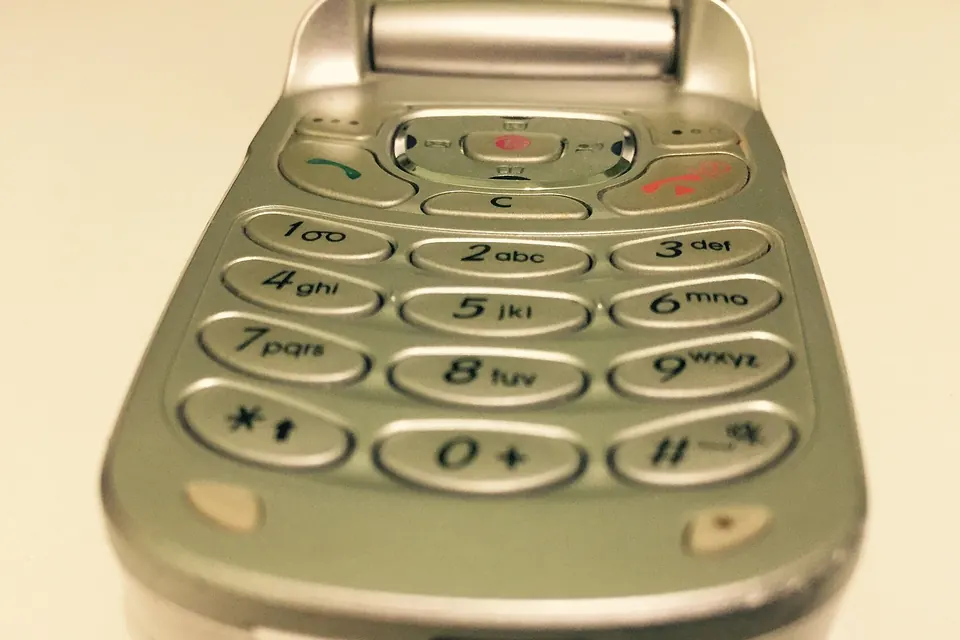
Because exit codes differ, the ITU's notation standard, Recommendation E.123, says that a number written for international use should start with a plus sign, which stands for "the international prefix of whatever country you are in" and marks the digits that follow as a complete international number. On a mobile phone you can type it directly: on most keypads, holding down the 0 key produces a +. Your operator's network then treats the call as international, so you never need to know whether the local exit code is 00, 011 or 0011.
That has a very practical consequence. A contact saved as +44 followed by the national number works when you are at home in the UK, when you are roaming in Spain and when you call through an app over Wi-Fi. A contact saved as 07... works only inside the UK. If you travel, or if your contacts live in several countries, store every number in plus format once and stop thinking about it. Our overview of ways to call from abroad explains which of those routes is cheapest; the number format is the same for all of them.
Landline phones, some office systems and a few older payphones cannot send a plus sign. On those, replace the + with the exit code of the country the phone is in.
The zero you must drop (usually)
Many countries put a trunk prefix in front of numbers when they are dialled within the country: 0 in the UK, France, Germany, Japan and Australia, and 1 in the United States and Canada. It is an instruction to the domestic network, not part of the number itself. The ITU is explicit that when you call from abroad, you dial the country code followed by the national number without the destination's trunk prefix.
In practice:
- A London number written 020 xxxx xxxx becomes +44 20 xxxx xxxx.
- A French mobile written 06 xx xx xx xx becomes +33 6 xx xx xx xx.
- A Tokyo number written 03-xxxx-xxxx becomes +81 3-xxxx-xxxx.
- A US number written 1 (212) xxx-xxxx becomes +1 212 xxx xxxx: the "1" of long-distance dialling and the country code happen to be the same digit, which is why Americans rarely notice the difference.
The exception that catches people out: Italy
Italy has no trunk prefix in the ITU's list. The 0 at the start of an Italian landline number is part of the number itself, so it stays: a Rome number written 06 xxxx xxxx is dialled from abroad as +39 06 xxxx xxxx. Italian mobile numbers start with 3 and have no zero to worry about. Dropping the zero on an Italian landline is one of the most common reasons a call to an Italian hotel or office fails.
The ITU list also records a curiosity next door: calls from Italy to San Marino use the prefix 0549 in front of the subscriber number instead of 00 378, and calls from San Marino to Italy use the full Italian national number without 0039. Small neighbours and shared networks often have arrangements like this, so if a call to a microstate or a border region fails, check its operator's or regulator's instructions.
Reading numbers written with brackets
Business cards and websites often show a number such as "+44 (0)20 xxxx xxxx". The (0) is meant to say "dial this zero only if you are calling from inside the country". It is a common habit, but E.123 says brackets should mark digits that are not always dialled in a national number and should not be used in an international one, precisely because people copy them. If you see a bracketed zero after a country code, leave it out, unless the country is Italy and the zero is not in brackets at all.
US numbers written "(212) xxx-xxxx" use brackets differently: the area code is always needed for calls from abroad, so keep the digits and drop only the brackets.
When the call still does not go through
- Count the digits. After the plus sign, a complete number should be no longer than 15 digits. A number much shorter than its country's usual length is probably missing an area code.
- Check for a doubled prefix. "+0044" or "+011" mixes the plus sign with an exit code and will fail. Use one or the other.
- Freephone and short numbers are different. Toll-free numbers and short service codes often cannot be reached from abroad at all; our guide to calling toll-free numbers from abroad explains why and what to dial instead.
- Be wary of unknown country codes. Some international codes look like domestic area codes, which is exactly what the one-ring missed-call scam exploits. Know the code before you call an unfamiliar number back.
The short version
Write and save every number as a plus sign, the country code and the national number without its trunk prefix. The plus replaces 00, 011, 010 or 0011 wherever you are. Drop the leading zero for the UK, France, Germany, Japan and Australia, drop the long-distance "1" for North America, and keep the zero for Italian landlines.
Sources
- ITU-T Recommendation E.164 (02/2026), "The international public telecommunication numbering plan": number length (clause 6.1), national (trunk) prefix and international prefix.
- ITU-T Recommendation E.123 (02/2001), "Notation for national and international telephone numbers, e-mail addresses and web addresses", clauses 7.1 (international prefix symbol) and 7.2 (use of parentheses).
- ITU Telecommunication Standardization Bureau, "Dialling procedures (international prefix, national (trunk) prefix and national (significant) number)", annex to ITU Operational Bulletin No. 994, position on 15 December 2011.
 Calling abroad
 compared
Roaming, local SIMs, travel eSIMs, Wi-Fi calling and apps: costs and catches side by side.
 Calling abroad
Toll-free numbers from abroad
Who pays for a freephone call, why it stops at the border, and the numbers and routes that still work when you travel.
 Calling abroad
EU roaming rules
What roam like at home covers, fair-use limits, and where the EU rules stop.